
Systems / Public reference
Fourth Crossing Systems
A software practice explained through connected records, handoffs, and exceptions.
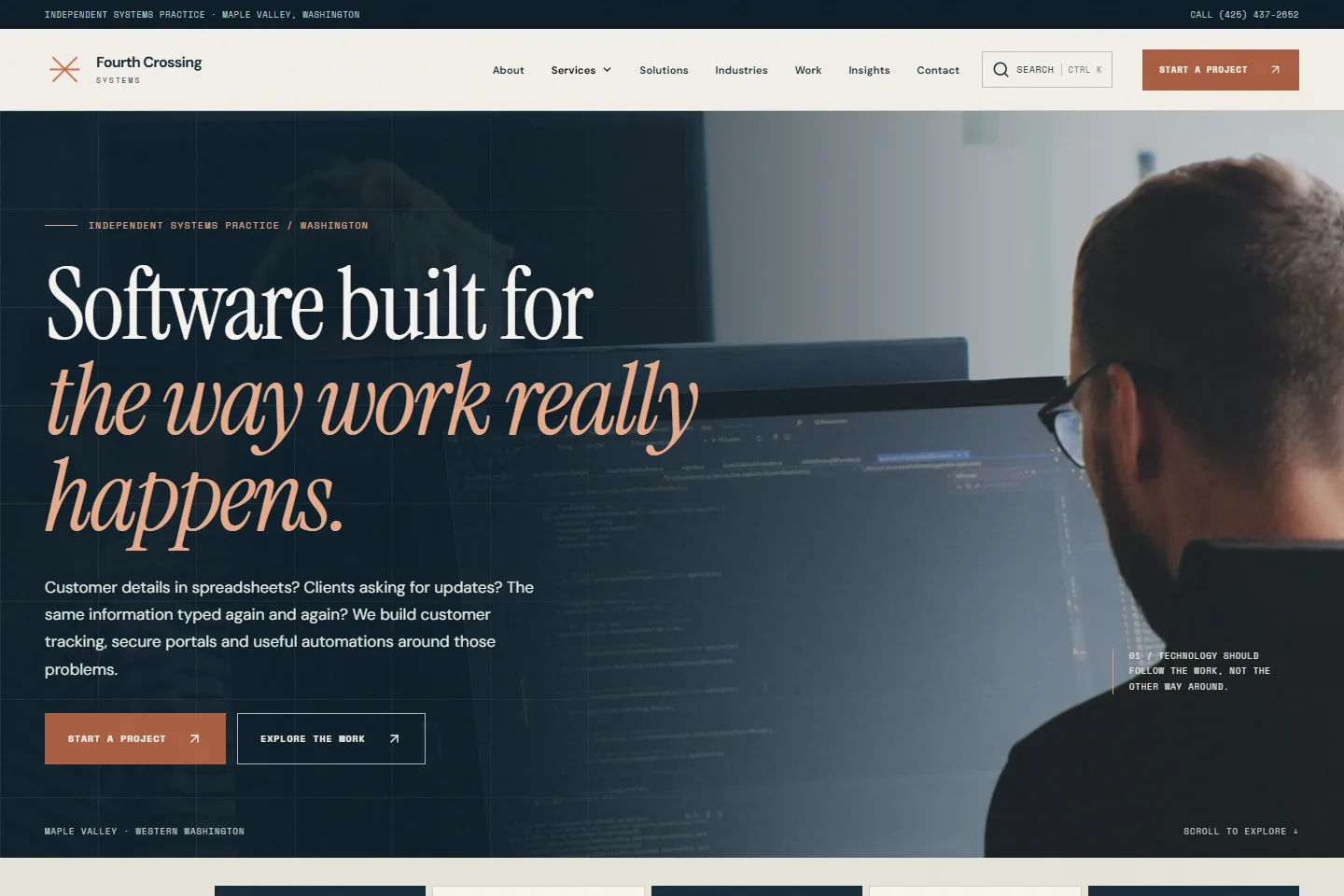
The business context.
A software service can be difficult to judge from a list of technologies. The visible experience explains operational problems and lets a buyer inspect the relationship between a CRM, portals, automation, and reporting.
No measured before-state or business-outcome baseline is claimed here. The explorer is visibly an illustrative architecture.
What you can inspect.
The public site leads with operational problems and links to substantive software services and full case pages.
The systems explorer changes the selected component explanation and shows normal information flow alongside incomplete, duplicate, and failed-step examples.
The public Marathon case distinguishes website evidence from an operational interface and qualifies its reported efficiency outcome.
Portfolio reference supplied by Leads To Sales. The observed website experience is documented here; specific delivery responsibilities and any collaborator credit need project-level confirmation before a public authorship claim.
Contribution and collaboration
Owner-identified website portfolio reference; specific delivery scope is subject to project-level attribution.
- Jamison Dyal and Taylor Moses identify Fourth Crossing in their founder backgrounds; that does not assign every delivery role to Leads To Sales.
Reference status
Public website / illustrative architecture
Public experience observed September 30, 2026; project delivery dates unverified.
Explain the shared record
A clear source of truth, owner, status, and history are easier to understand than decorative connection lines.
Make exceptions part of the story
Missing information, possible duplicates, and failed steps show where human review and recovery matter.
Keep full case destinations
The source controls supplement substantive URLs instead of making essential scope readable only in a modal.
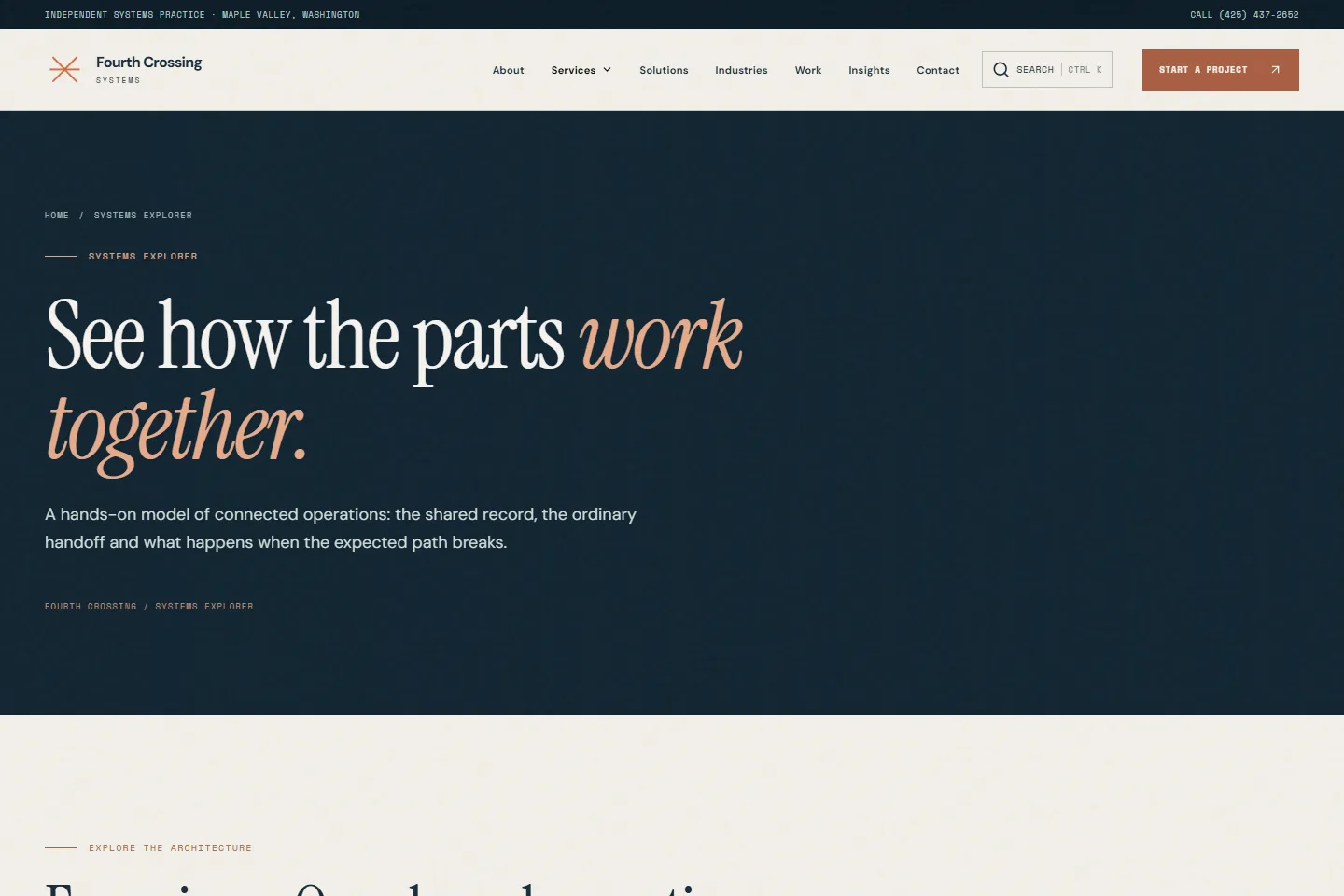
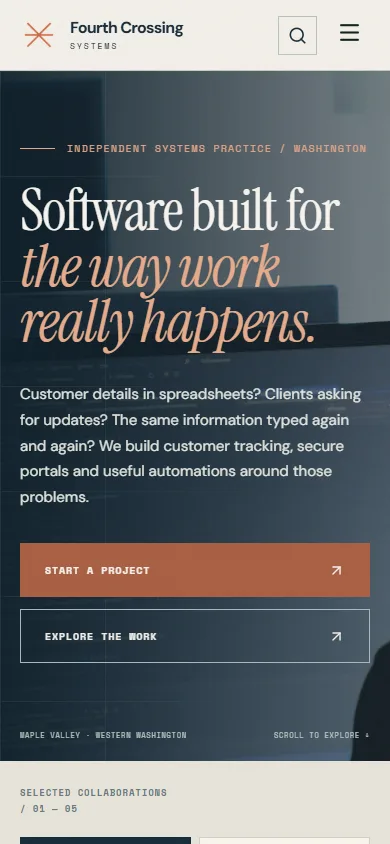
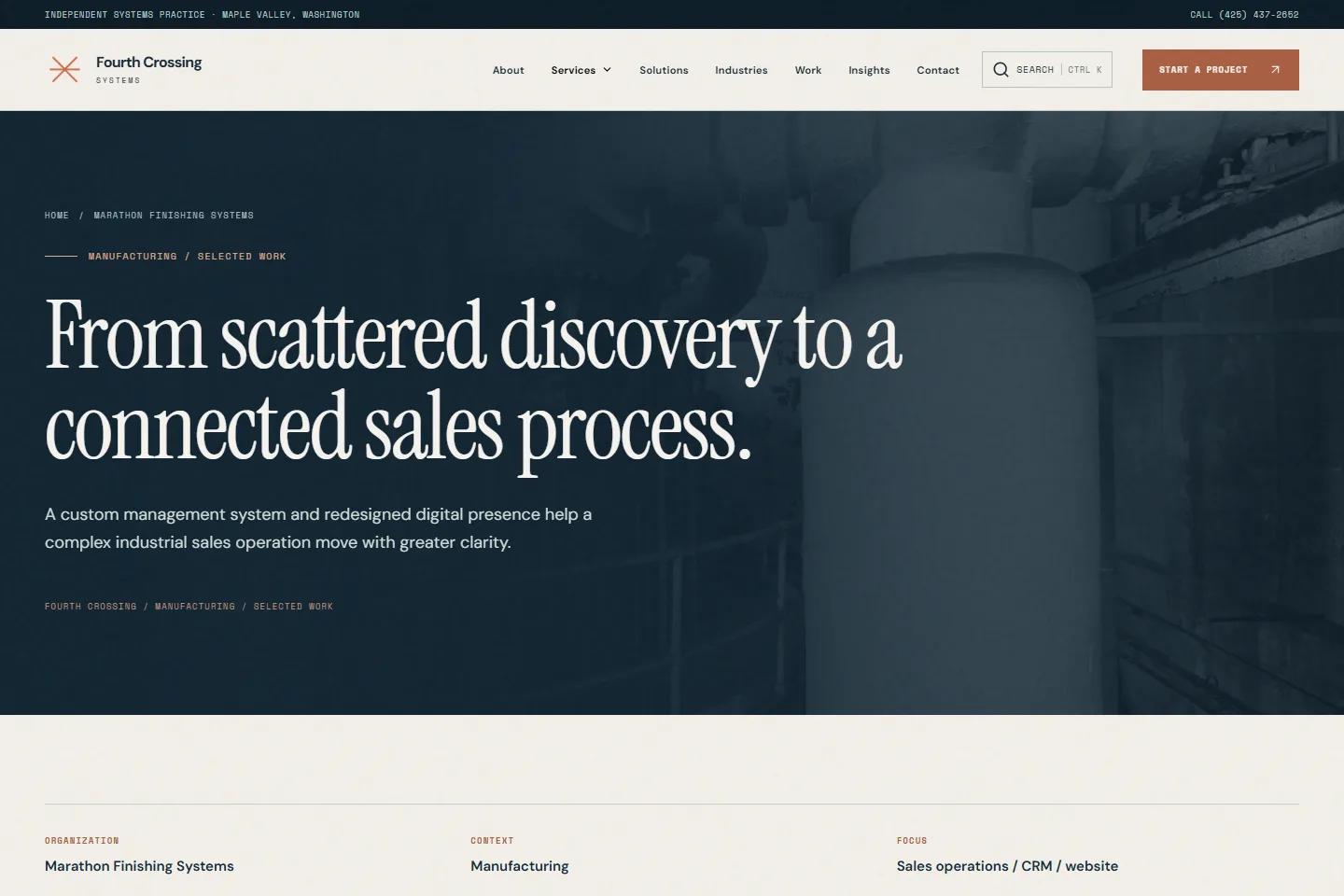
Public case page · website and internal-system evidence are described separately.
Observed public site and systems explorer. Captures show the observed public pages and responsive interface. They do not prove access to, ownership of, or implementation of private operational systems.
Keep the source
with the story.
Visitors select a component or failure scenario and receive an explanation of the input, handoff, ownership, and recovery. This is a public explanatory model, not live operational health or an executed integration.
View source- This is an owner-identified portfolio reference. The public website and sampled controls were observed; precise delivery dates, individual team roles, and authorship of every component are not independently established.
- A website capture does not verify private applications, provider integrations, complete-site accessibility or performance, or business results.
- No inquiry, booking, quote request, customer record, or other consequential action was submitted during research.
What this reference helps you consider.
If a proposed integration cannot explain the data owner and exception path, the workflow is not ready to promise. Map those decisions before implementation.
Map a connected workflowLet’s build what’s next
What should work
better in your business?
Bring us the bottleneck. We’ll talk through the work, the people, and what a useful next step could look like.